Friday, March 19, 2021

Take You To Know PCB Substrate

 High performance hard organic PCB substrate usually consists of dielectric layer (epoxy resin, glass fiber) and a high purity conductor (copper foil). We evaluate the parameters related to the quality of printed circuit board substrate, mainly including glass transition temperature Tg, thermal expansion coefficient CTE, heat-resistant decomposition time and decomposition temperature Td of substrate, electrical performance, PCB water absorption, electrical mobility CAF and so on.

Generally printed circuit board substrate can be divided into two types : rigid substrate materials and flexible substrate materials. The important type of general rigid substrate material is copper clad plate.
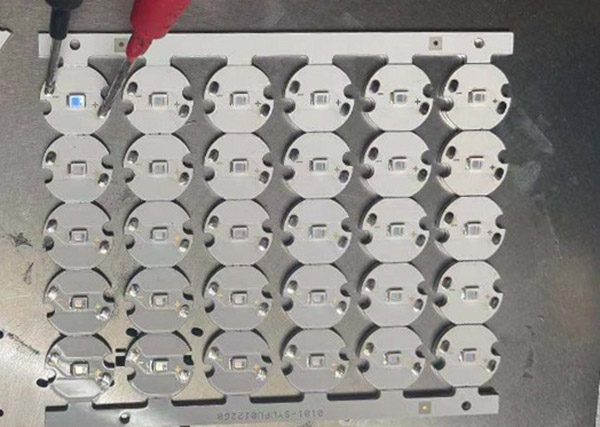

Aluminum PCB Substrate Plate for 2835 Light Bead 16mm


According to PCB board reinforcement materials are generally divided into the following types :

1.Phenolic PCB Paper Substrate

Because this PCB is composed of paper pulp, wood pulp, etc., it is sometimes also known as cardboard, V0 board, flame retardant board, 94HB, etc. Its main material is wood pulp fiber paper, through the phenolic resin pressure and synthesis of a PCB board.

Characteristics : don’t fireproof, can be punched processing, low cost, cheap price, relatively small density.

2.Composite PCB Substrate

This is also known as powder board, with wood pulp fiber paper or cotton pulp fiber paper as the reinforcing material. Glass fiber cloth is also used as the surface reinforcement material. Both materials are made of flame retardant epoxy resin.

There are single-side semi-fiberglass 22F, CEM-1 and double-side semi-fiberglass CEM-3, among which CEM-1 and CEM-3 are the most common composite substrate copper clad panels at present.

3.Glass Fiber PCB Substrate

Sometimes it is also called epoxy board, glass fiber board, FR4, fiberboard, etc. It is made of epoxy resin as a binder and glass fiber cloth as a reinforcing material.

Characteristics : high working temperature, little environmental influence, often used in double-sided PCB board.

4.Other PCB Substrate

In addition to the three commonly seen above, there are also metal substrates and BUM.

Sub-base material technology and production, has experienced half a century of development, the world’s annual output has reached 290 million square meters. This development moment is driven by the innovation and development of electronics complete machine products, semiconductor manufacturing technology, electronics installation technology and printed circuit board technology.
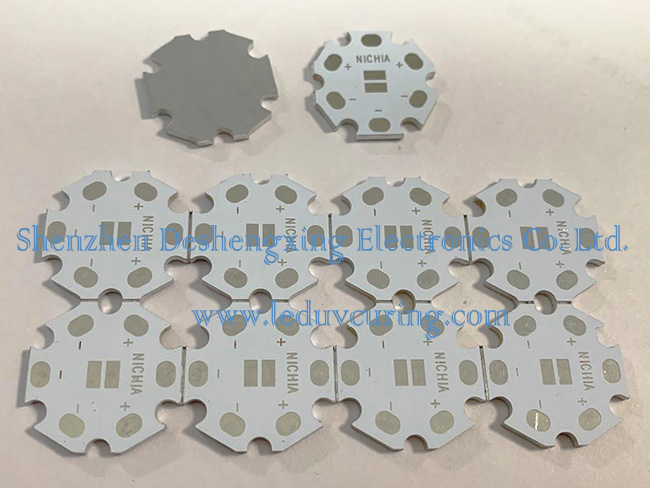

Aluminum Printed Circuit Board for NCSU276A NVSU233B


China’s substrate material industry after 40 years of development, has formed an annual output value of about 9 billion yuan of production scale. In 2000, the total output of China’s mainland copper clad plates has reached 64 million square meters, creating an output value of 5.5 billion yuan. Among them, the output of paper-based copper-clad plate has ranked third in the world. But in the technical level, product variety, especially in the development of new substrate, there is a considerable gap with foreign advanced countries.
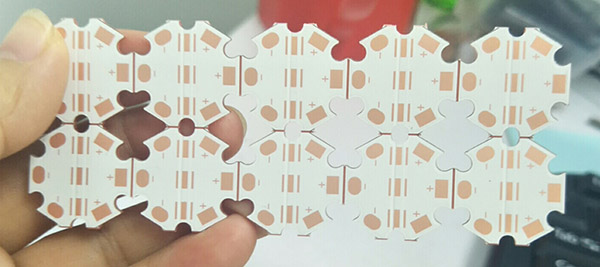

20mm Copper Substrate for 3535 LED

Tuesday, March 9, 2021

Solidified Camera Module, Installed Surveillance Camera

 Some camera module manufacturers used UV lamp irradiation curing before, the time is longer. In addition, the surface temperature of the camera assembly is higher after irradiation, which seriously affects the quality of their products. Therefore, they found us, Shenzhen Deshengxing Electronics Co., Ltd., to conduct special product testing.


365nm Ultraviolet Curing Equipment Bonding Camera Module


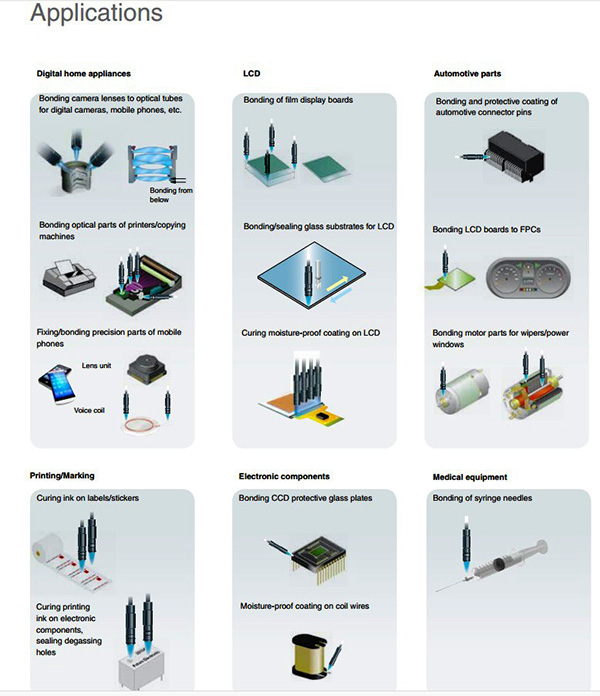
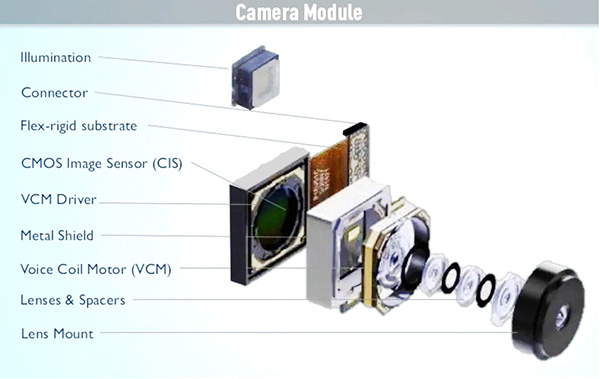
We knew that, in the production process of the security surveillance camera module, we need to use UV glue to fix the filters, lenses, CMOS components, etc. Because of using UV glue bonding, and the requirements of camera module is relatively high, it needs to use matched UV LED curing light source for curing and drying. And, because the volume of camera module is relatively small, we have given priority to choose Shenzhen Deshengxing Electronics Co., Ltd. UV LED Spot Light Source Equipment for product testing.


UV Spot Light Curing Equipment Curing Ink UV Glue

(overall / individual control)


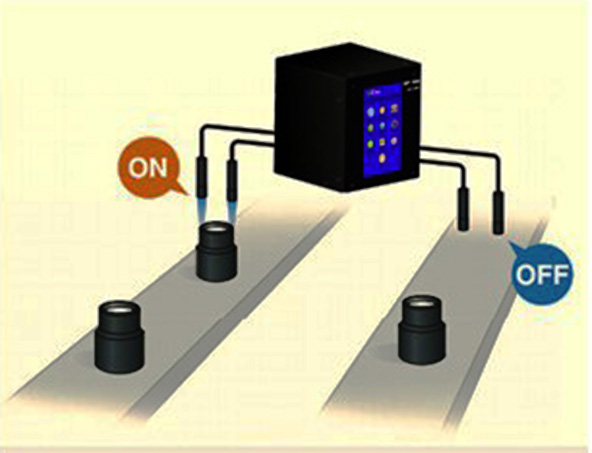
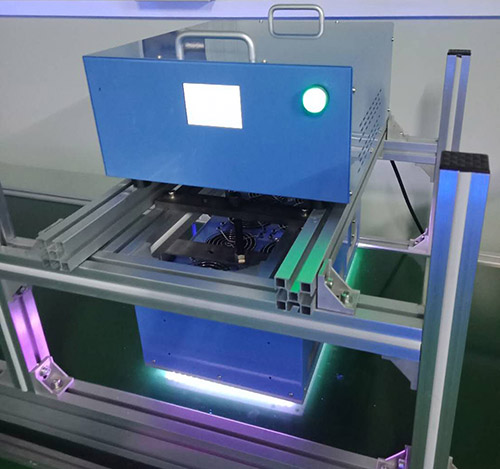
After a series of comparative tests, the customer choose a custom UV LED spot light source equipment here for the curing UV glue. According to the test results, the surface temperature of the UV glue does not rise more than 5 ℃ after 5-10 seconds of UV irradiation, and the use of ordinary natural cooling irradiation head can meet the use requirements. Combined with actual using situation, we chose 1+4 UV LED spot light source curing machine to test. LED UV Curing Machine from Shenzhen Deshengxing Electronics Co., Ltd. not only greatly saves the curing time, but also the temperature of the camera module parts does not change basically. The curing effect of the UV glue is particularly good, which effectively solves the problems encountered by customers and achieves long-term cooperation opinions.


High Power LED UV Spot Light Drying Lamp Curing Systems

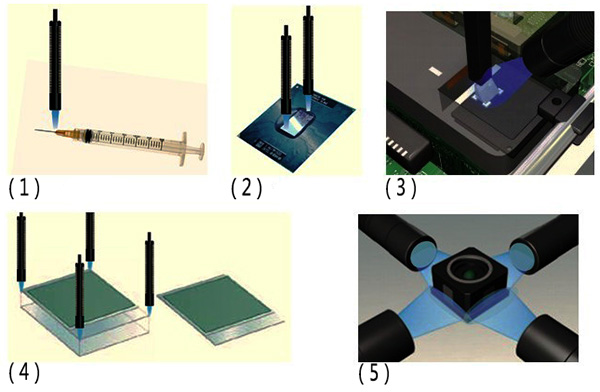
(1) medical products  (2) electronics  (3) components fixed

(4) LCD pre cured  (5) camera module


High Effective UV Spot Light Curing Lamp 365nm


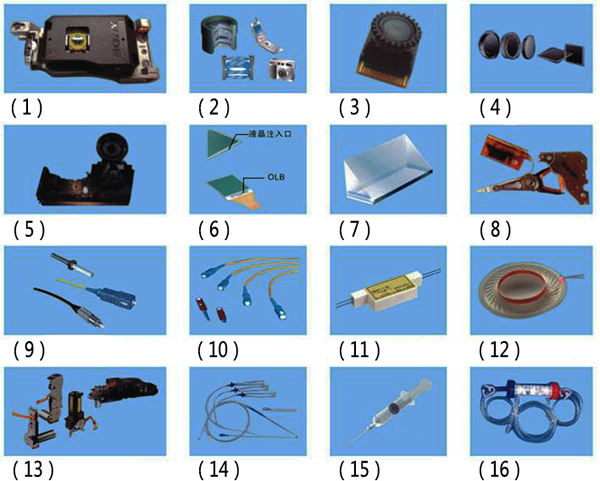
(1) DVD/CD lens bonding irradiation

(2) lens and filter bonding irradiation

(3) digital lens IC bonding irradiation

(4) lens scoring bonding irradiation

(5) LCD/DLP optical

(6) liquid crystal main inlet seal and OLB enhancement

(7) small prism bonding

(8) hard disk, magnetic head bonding irradiation

(9) after core-adjusting, fiber optic connector parts bonding irradiation

(10) optical fiber color bonding irradiation

(11) photo-electric switch/special shaped parts bonding irradiation

(12) earphone voice coil bonding irradiation

(13) miniature motor parts bonding irradiation

(14) medical products bonding irradiation

(15) injecting needle fixation bonding irradiation

(16) compound bonding irradiation


UV LED Spot Light Curing System Industrial Drying

Friday, March 5, 2021

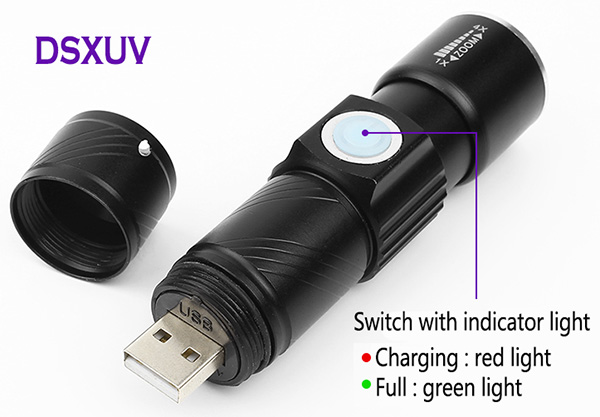
Portable 5W 395nm UV Flashlight Curing Lamp USB Charging Detection Light

 USB Chargeable UV Flashlight 395nm is made with 5W high power UV LED light beads, which the lifetime can reach 100000 hours. This kind of 395nm UV LED Flashlight is simple operation, small and easy to carry. It not only can be used in curing glue, also can be used in detection and discrimination.


Parameters : 

Brand : DSXUV

Name : UV Flashlight Curing Lamp

Type : DSXUV-9200395

Material : aluminum alloy, waterproof and moisture-proof

Light source : UV LED Lamp Beads

Wavelength : 395nm

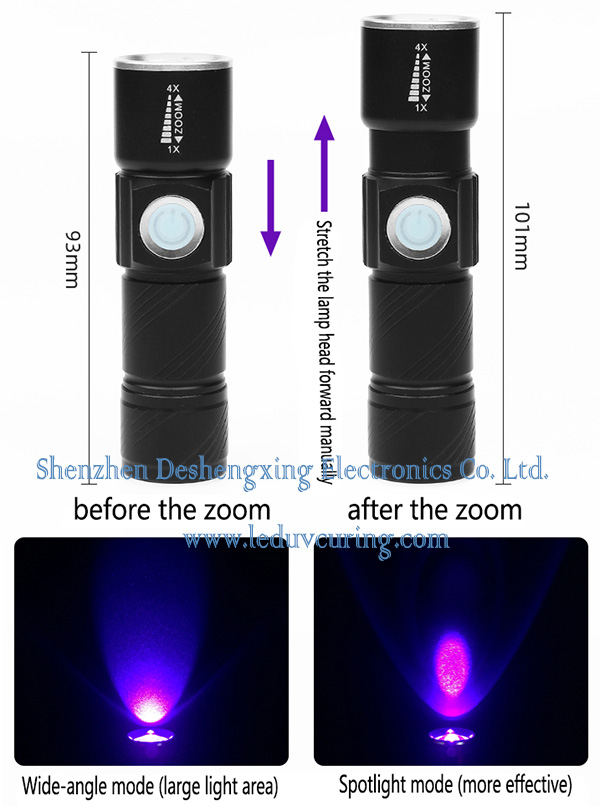
Size : 93*26mm

Charge : USB charge

Type : strong light, weak light, flash light

Weight : 70g

Hand-held Ultraviolet Torch Curing Light


Telescopic focusing design (adjust the irradiation range according to the use requirements)

Stretch the lamp head forward manually

395nm UV LED Curing Flashlight for Detection


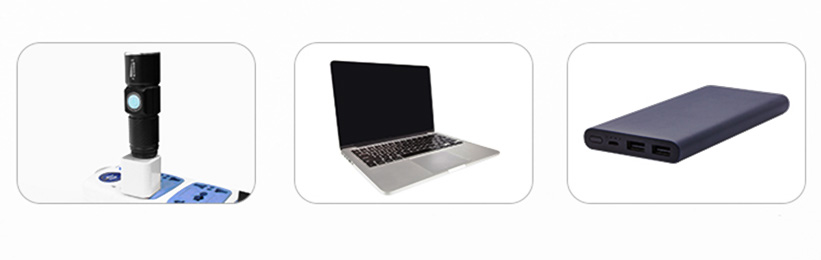
Compatible with various charging modes : 

1. Charging by charger

2. Notebook charging

3. Charge the battery

Fast, stable and convenient, built-in high capacity battery

USB plug direct charge, hidden plug

Rechargeable 395nm Ultraviolet Torch Light

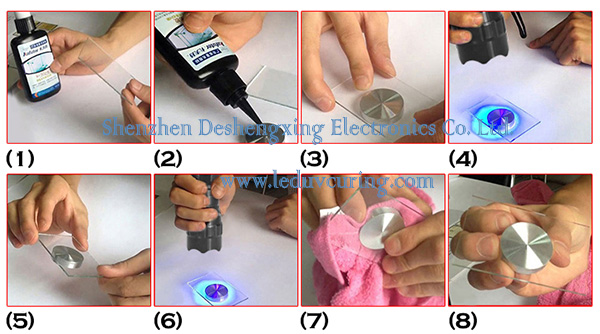
Usage : 

1.Prepare the objects to be bonded, shadowless glue, and ultraviolet flashlight curing light

2.Drop the glue on the sticky material (2-3 drops)

3.Fit the glass sheet onto the aluminum sheet with the glue dripping, and press it flat

4.Shine UV light for about 3 seconds, and make preliminary positioning

5.Check whether the position is correct, if not, it needs to be re-bonded

6.For a good position, use UV flashlight curing lamp until curing

7.Wide up the spilled glue with a wet towel

8.Bonding finished

Florescence Detection UV LED Torch Lamp Supplier


Suitable for testing a variety of items : 

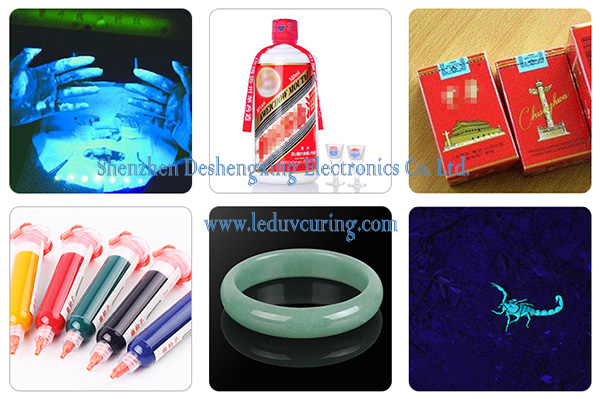
1. Check the authenticity of the bill

2. All kinds of stealth security code

3. Fluorescent detection

4. According to the jade

5. Grasp the scorpion

6. Green oil and UV glue curing

7. Famous anti-counterfeiting

8. Tobacco security

9. Jade anti-counterfeiting

395nm High Energy UV Curing Lamp Ultraviolet Torch Light

Sunday, February 28, 2021

The Germicidal Experiment Process and Results of NICHIA Exposure at 280nm

 NICHIA Corporation (Headquarters: Anan City, Tokushima; President: Hiroyoshi Ogawa; hereinafter “Nichia”) announces confirmation through experimentation of the inactivation effect (99.99%) of NICHIA’s 280nm deep UV LEDs on the novel coronavirus SARS-CoV-2.


1.Summary of the experimental results

This experiment was carried out by Professor Masako Nomaguchi and Assistant Professor Takaaki Koma of Tokushima University Graduate School of Biomedical Sciences.

Experimental environment (reconstruction) irradiation conditions : irradiation distance 50mm, irradiance 1.7mW/cm2

Experimental results : the inactivation effect of Novel Coronavirus was confirmed to be 99.99% after 30 seconds of deep ultraviolet irradiation.


Irradiation time

Inactivation effect

30 seconds

99.99%

10 seconds

98.42%

5 seconds

93.28%

Table 1. Inactivation effect by irradiation time (reference values)


The Efficacy Assessment of Disinfecting Substances Alternative to Alcohol for Use Against Severe Acute Respiratory Syndrome Coronavirus 2 (SARS-CoV-2) (Ministry of Economy, Trade and Industry) has judged virucidal efficacy of disinfecting substances against SARS-CoV-2 on the basis of the criterion set at a 99.99% or more reduction in viral titer.

The virucidal effect of handwashing and hand sanitizers, recommended as measures to control infectious diseases, is reported to be

• about 99% when washing hands with running water for 15 seconds

• 99.99% when using commonly-available alcohol-based hand sanitizer (containing 77–81% ethanol) for 30 seconds.

However, to get a better cleaning effect, hands must be thoroughly rubbed when washing with water. When using alcohol disinfection, sufficient amounts of alcohol are required to contact the object being sterilized, which takes time and effort.

According to the experimental results of deep ultraviolet ray, we know that it can easily achieve high sterilization effect in a shorter time.

We found that deep 280nm UVC UV LEDs may have a high virucidal effect while saving time and effort.


Experimental environment (reconstruction)


SARS-CoV-2HuDPKng19 020, Genbank LC528232


2. Virucidal power

Sterilization by deep 280nm Ultraviolet LEDs involves the following two factors:

• Wavelength: The difference in the virucidal effect according to wavelength shows that a wavelength of 260 nm exhibits the highest virucidal effect (100%).


Difference in the virucidal effect according to wavelength


• Optical output power: Higher optical output power (radiant flux) of LEDs is favorable.


Optical output power


Sterilization power is obtained by multiplying the virucidal effect according to wavelength by optical output power.


Virucidal power


While the life span of the 265nm LED is expected to be approximately 2,000 hours, that of the 280nm LED is expected to be approximately 20,000 hours, or roughly 10 times as long as that of the 265nm LED.

The shorter the wavelength of light emitted from UV LEDs meanslower performance, such as output and lifespan.Therefore, the power conversion efficiency (i.e. wall-plug efficiency or WPE) of the UV LED also declines sharply. Conversely, NICHIA NCSU334B 280nm UVC LEDs can present higher output and longer lifespans.

In addition, the putative life of 280nm is about 20000 hours, while 265nm is estimated to be about 2000 hours, so 280nm is about 10 times longer. Ultraviolet LEDs have the characteristics that : when the wavelength is short, the performance such as light power and life will be reduced, and the photoelectric conversion efficiency will also be very low. This feature results in a high output power of 280nm and long life. Therefore, in consideration of higher bactericidal capacity and longevity, the wavelength of 280nm was adopted for this inactivation experiment.


3.Contribution of pilot products

NICHIA has contributed additional prototype hand-held UV irradiation devices that were made for the inactivation experiment to Tokushima Prefecture (20 units) and Tokushima University (30 units). This rechargeable, portable device can be easily used for sanitizing common spaces and surfaces where alcohol-based solution cannot be used.


NCSU334A 280nm UV Sterilization Device


NCSU334B

 6.8x6.8x2.12

Wavelength

280nm

Radiant flux

70mW

Current

350mA

Forward voltage

5.5V

WPE

3.6%


This device is equipped with 12pcs deep 280nm Ultraviolet UV LEDs NCSU334B  at intervals of 25 mm These LEDs offer the industry’s highest radiant flux, 70mW (typical value), and WPE, 3.6%, at the peak wavelength of 280nm (typical value) (according to NICHIA research).

NICHIA will continue to devote itself to the development of high power deep ultraviolet LED with stronger bactericidal ability in the future, in order to overcome Novel Coronavirus, and hope that this deep ultraviolet LED is used in all kinds of products, also can bring you some help in daily life.


References

1) The Journal of the Japanese Association for Infectious Diseases, 80:496-500, 2006.

2) J. Antibact. Antifung. Agents, Vol.48, No.9, pp.477-480 (2020).

3) JIS Z8811-1968

4)from NICHIA Corporation News

Thursday, February 25, 2021

12 Inches Cutting Scratches Transport Fixed Silicon Disk Iron Ring Frame Special For Blue Film

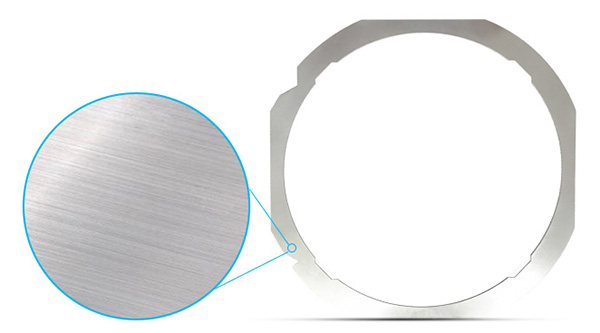
 Stainless Steel 12’’ Wafer Ring Metal Film Frame is selection of materials through SGS certification, high bending strength, high hardness, can bear high load, high wear, corrosive media. 12 inches Blue Film Attachment Wafer Ring is with strong hardness, resistance to bending, good stickiness, durability.


Product information for Stainless Steel Wafer Chip Rings :

Brand : DSXUV

Name : wafer chip ring

No. : DSMTQE12-000-R0

Material : SUS420j2 (stainless steel)

Specification : 12 inches (OD 379.8*380.4mm, ID R177.6mm)

Application : it can be widely used in semiconductor wafer packaging, film coating, cutting, solid crystal and other processes in electronics factory.

12 inches Wafer Iron Ring for Semiconductor Blue Film


Product features of Semiconductor Wafer Ring Metal Frame :

1. Heat treatment process of selected raw material

SUS420J2 imported material, with good corrosion resistance, heat resistance. The product has good resistance to rebound after heat treatment.

2. Surface electropolishing treatment

The surface is polished, the surface flatness can reach above ±0.01mm, the finish RX value can reach above 0.08um, can keep clean and beautiful for a long time.

3. Laser cutting with high accuracy

Advanced laser cutting machine is with high cutting accuracy, shape tolerance according to GB/T1184-K, size tolerance according to GB/T1804-M standard processing molding.

Stainless Steel 12'' Wafer Film Frame for Wafer Semiconductor


Applications of 12’’ Disco Wafer Frame Ring :

Bearing silicon wafers used in semiconductor packaging or LED packaging process : film/wafer mount, grinding/back grinding, cutting/die saw, bonding(solid crystal)/die attach, turnaround transport and other processes.


Stainless Steel 12 inches Wafer Expanding Ring Metal Film Frame Hoop

Monday, February 22, 2021

Why Is NICHIA UV LED Fond Of 280nm?

 On December 29, in the expert said, UV LED wind direction jointly held by the expert said 2020 annual meeting · deep ultraviolet LED special summit forum, Mr. Hu Jun, deputy manager of Japan and Asia shared the "280nm sterilization solution and NICHIA UV LED products" keynote speech.


280nm sterilization solution and NICHIA UV LED products


Hu Jun, vice manager of NICHIA, pointed out that NICHIA focused on the development of 280nm UVC LED and improve the optical power, and in 2019 successfully launched the wavelength of 280nm, power of 55mW UVC LED -- NVSU334A. In September 2020, NICHIA launched an upgraded version of 280nm 70mW UVC LED with an external quantum efficiency of 3.6%, while similar UV LED products on the market are usually 265nm.


So, why in a variety of UVC bands, NICHIA chose 280nm as a sterilization solution? Mr. Hu Jun made the scene to answer.

Mr. Hu Jun said that UV sterilization and other comparison, there are many advantages, but in the daily life scene or industrial scene, the use of UV sterilization is not very popular. And even in the sterilization method, the Minamata Convention requires the elimination of mercury, but mercury lamp utilization rate is higher than UV LED. This is because LEDs are not efficient enough to replace all mercury lamps used in everyday life and industry. Therefore, this is a problem facing LED enterprises together.


Therefore, for all LED enterprises, improving efficiency is a top priority. NICHIA chose 280nm as the UVC sterilization product, and it is the only one band, no other band. The reason why NICHIA chose 280nm is that its product development believes that higher conversion efficiency can be achieved at 280nm. The current mass-produced product has an efficiency of 3-4% and a very long life.


Through comparison and verification, the sterilization efficiency of 265nm UVC LED is 95% under the same condition of using 3W power. But the efficiency of 265nm UVC Ultraviolet LED light is not very high. So the power output is not high, which is 50mW. However, the killing efficiency of 280nm UVC LED Light Bead is 60%, which is lower than that of 265nm UVC LED. But it has higher efficiency and higher power output, which can reach 100mW. A simple calculation can be made based on the above data. The output power of 280nm UVC LED is 100mW multiplied by 60% of the sterilization efficiency to get 60 points. The output power of 265nm UVC UV LED Lamp is 50mW multiplied by 95% of the sterilization efficiency to get 48 points. This means that 280nm UVC Ultraviolet LEDs use less power to kill the same bacteria.


280nm UVC LED Ultraviolet Light Beads Sterilization Effect


In addition, another advantage of 280nm UVC LEDs is that they last longer than 265nm UVC Ultraviolet LED Lights. For example, NICHIA NCSU334B UVC LED product maintains a 92% performance maintenance rate after 5000 hours of use. The 265nm UVC LED light beads dropped to 67% at the same time. From the user’s point of view, users want longer and more reliable products, not frequent replacement.


Therefore, NICHIA chose 280nm band as UVC LED Sterilization Lamp products, together with the industry, is committed to solving the pain point of low efficiency of UVC LED, effectively popularize the healthy and pollu-free sterilization program of UVC LED.

Sunday, January 17, 2021

Factors Influencing The Curing Time Of UV Glue

 In cognition, we know that the curing speed of UV glue is very fast. In a certain wavelength of ultraviolet radiation can be dry within a few seconds. In actual use, the curing time of UV glue will be affected by a different factors. The factors affecting the curing time of UV glue are mainly divided into internal factors and external factors.


1.Internal factors

Internal factors are also decisive factors. Photo-initiator is one of the main components of any UV curing system, which plays a decisive role in the curing rate of UV system. Different UV glue formulations, the proportion of photo-initiator dosage is appropriate curing completely. On the contrary, it is slow and may not be cured.


2.External factors

UV curing adhesive curing rate, final curing depth and surface dry effect and UV light source, lighting time, material transmittance and other factors are also related, it is recommended to determine the specific curing time through the test.

Related to the power of the ultraviolet curing lamp, high power curing polymerization is fast, otherwise the opposite. Under normal circumstances, UV glue is cured by UV curing lamp irradiation. Low wattage UV solidification systems curing time will be extended under irradiation. High wattage Ultraviolet lamp curing time will be shortened under irradiation.

It is also related to the transmittance of the material. The material is conducive to ultraviolet light penetration, which is conducive to fast curing speed. On the contrary, the curing time is extended. If UV penetration is difficult, it may not cure.


Customized UV Glue Curing Equipment Manufacturer